
First Aid Training Company
Enquire Today For A Free No Obligation Quote
At First Aid Training Company, we deliver a wide range of accredited first aid programmes across the UK, supporting individuals and employers in meeting workplace safety regulations and industry standards.
Whether you require essential emergency skills or advanced sector-specific certification, our courses provide practical, competency-based training designed around real workplace scenarios. Each programme helps organisations strengthen safety culture, meet legal obligations, and ensure staff are fully prepared to respond during medical incidents.
How Are First Aid Courses Adapted for High-Risk Workplaces?
Training providers tailor first aid courses to address hazards specific to high-risk environments such as construction sites, factories, and engineering facilities.
Content may include guidance on crush injuries, chemical exposure, electric shock, heavy machinery incidents, and severe bleeding. These tailored adaptations ensure employees receive training that directly reflects the emergencies they are most likely to encounter.
How Much Does First Aid Training Cost?
The cost of first aid training ranges from £40 to £300, depending on course type, duration, accreditation, and delivery format.
Pricing is shaped by the level of certification required, practical assessments, provider expertise, and the inclusion of specialist content. Group bookings or employer-funded sessions can reduce overall pricing, with certification and materials commonly included.
Contact First Aid Training Company for tailored pricing based on your organisation’s requirements.
What Types of First Aid Courses Are Available?
First aid training covers multiple course options designed to meet varying workplace and industry needs, including:
- Emergency First Aid at Work (EFAW) – One-day essential life-saving skills for low-risk settings.
- First Aid at Work (FAW) – A comprehensive programme for higher-risk environments.
- Paediatric First Aid – Suitable for schools, nurseries, and childcare providers.
- Sports First Aid – Focused on responding to injuries common in physical activity.
- Mental Health First Aid – Helping staff identify and support mental health concerns.
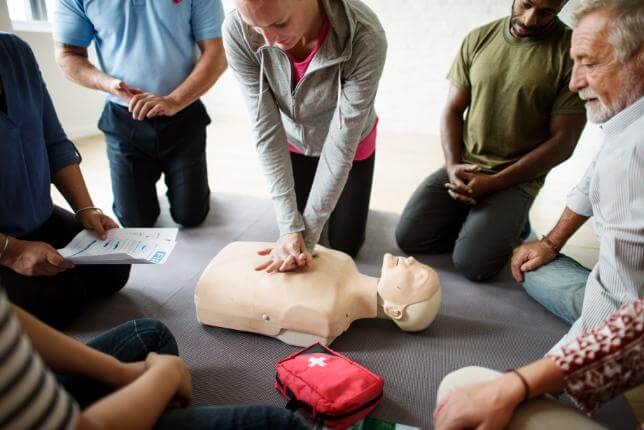
- CPR & AED Training – Instruction on performing CPR and using defibrillators safely.
- Specialist modules – Including anaphylaxis response, catastrophic bleeding control, and lone-worker emergencies.
Which Industries Commonly Require First Aid Certification?
First aid training is essential across multiple sectors, including:
- Construction – High-risk tasks requiring robust emergency response training.
- Healthcare and social care – Supporting patient-facing roles and regulated environments.
- Education and childcare – Meeting EYFS and safeguarding requirements.
- Manufacturing and engineering – Responding to machinery-related incidents and injuries.
- Hospitality and retail – Ensuring staff can manage customer or employee emergencies.
- Sports and leisure – Handling activity-related injuries and urgent care situations.
Do First Aid Qualifications Improve Job Prospects?
Employers value recognised first aid certifications as they contribute to safer workplaces and demonstrate practical competence.
Holding an EFAW, FAW, or paediatric qualification can support applications for roles in education, healthcare, construction, hospitality, and management positions. Some employers provide funded training to upskill staff and meet regulatory requirements.
Which First Aid Certifications Are Widely Recognised?
A range of respected first aid qualifications is available, including:
- EFAW and FAW certifications – Meeting Health and Safety (First Aid) Regulations 1981.
- Paediatric First Aid – Compliant with EYFS and Ofsted standards.
- CPR & AED accreditations – Accepted across public and private organisations.
- Industry-specific modules – Recognised by employers in construction, sports, and care sectors.
Are Short Courses and Refreshers Available?
First aid refresher and short-course options are available to maintain regulatory compliance and skill confidence.
Renewal is typically required every three years, while annual refreshers help ensure knowledge remains current. Short courses may be delivered online, on-site, or in a local training centre.
Do You Provide On-Site First Aid Training?
On-site first aid training is available, enabling employers to train staff directly within their own premises.
Trainers supply all necessary equipment and tailor content to workplace-specific risks such as machinery use, chemicals, or public-facing duties. This approach reduces downtime and supports consistent staff competence.
What Training Materials and Resources Are Included with First Aid Courses?
First aid courses typically include comprehensive learner manuals, quick-reference guides, and access to digital resources for ongoing study.
Participants often receive practice materials during training, such as bandages, PPE samples, and CPR practice kits, depending on the course type. These resources support long-term knowledge retention and help employees feel prepared to act during genuine emergencies.
Contact First Aid Training Company for support in arranging certified first aid training.
Find More Info
Make sure you contact us today for a number of great first aid training company services.
For more information on First Aid Training Company, fill in the contact form below to receive a free quote today.
★★★★★
The course was delivered in such a clear and reassuring way that even our newer staff felt confident handling emergency scenarios. The hands-on practice made everything far easier to remember, and the trainer kept the whole session engaging from start to finish. We’ll definitely be booking again for our annual refresher.
Daniel Pritchard
Greater London
★★★★★
The training was thorough and easy to follow, giving our team the confidence to respond properly in genuine emergencies. The instructor related the scenarios to the risks we face on-site, which made the whole session feel practical and relevant. A reliable service that I’d happily recommend to other businesses.
Lydia Marston
Greater London